
The sirens have stopped, the hail has moved on, and your neighborhood looks like it just went through a war zone. Dented cars in the driveway, leaves shredded off the trees, and that sinking feeling that your roof just took a serious beating.
If you live anywhere along Colorado's Front Range, this scenario is not unusual. It is basically an annual event. The question is not whether your neighborhood will get hit by hail. The question is what you do in the hours and days after it happens. The steps you take right now can save you thousands of dollars, protect your insurance claim, and make the difference between a smooth restoration and a nightmare that drags on for months.
Here is exactly what to do, in order, after a hailstorm hits your neighborhood.
Step 1: Stay Inside Until the Storm Has Fully Passed
This one sounds obvious, but you would be amazed how many people rush outside the second the hail lets up. Colorado hailstorms are unpredictable. They can stall, circle back, or produce a second round of severe weather within minutes. Lightning is often still active in the area even after the hail stops falling.
Wait at least 15 to 20 minutes after the last hailstone falls before going outside. Use that time to check inside your home for any immediate problems. Walk through every room and look at the ceilings for water spots, drips, or bulging drywall. Check the attic if you can safely access it. Look for daylight coming through the roof deck or any sign of moisture on the underside of the decking.
If you see active water intrusion, put buckets under the drips and move furniture, electronics, and anything valuable away from the wet areas. If a section of ceiling is bulging with trapped water, carefully poke a small hole in the center with a screwdriver to let it drain into a bucket. This prevents the entire ceiling from collapsing under the weight.
Step 2: Document Everything Before You Touch Anything
Once it is safe to go outside, grab your phone and start documenting. This is arguably the most important step in the entire process, and most homeowners do not do it thoroughly enough.
Photograph and video everything. Walk slowly around your entire property and capture damage from multiple angles. Here is what to focus on:
Hail on the ground. If there are still hailstones lying around, photograph them with a coin, ruler, or your hand next to them for scale. Hailstones melt fast in Colorado's sun, so get these photos immediately. Your car. If any vehicles were outside during the storm, photograph every dent. Car damage is some of the strongest evidence of hail size and intensity. Gutters and downspouts. Look for dents, dings, and dislodged sections. Metal gutters show hail impact clearly. Your AC unit. The aluminum fins on your condenser are soft and show hail damage easily. Photograph any denting. Window screens. Hailstones punch holes in screens and leave impact marks that document the event. Siding, trim, and paint. Look for chipped paint, cracked vinyl, or dented aluminum. Fencing, mailbox, and garage door. Any soft metal surface that was exposed during the storm will show evidence. Deck surfaces and patio furniture. Wood decking takes distinctive round impact marks from hail professional gutter services.
Take wide shots that show the overall property and close ups that show specific damage details. Make sure your phone's date and time stamp is enabled. This creates a chronological record tied to the storm event.
Do not forget to document the roof from the ground. Use your phone's zoom to capture any visible shingle damage, missing pieces, or debris on the roof surface. Do NOT get on the roof yourself. A wet, damaged roof is incredibly dangerous, and you do not need to be up there for documentation purposes.
Step 3: Contact Your Insurance Company (Sooner, Not Later)
Call your insurance company and file a claim as soon as you have your initial documentation. Most major insurers have 24 hour storm hotlines that are staffed up after severe weather events in Colorado.
When you call, have your policy number ready and be prepared to describe what you observed. Stick to the facts. Tell them when the storm hit, what you saw, and what damage you have documented. Do not speculate about the extent of damage or the cost of repairs. That is what the adjuster and your contractor are for.
Here is why timing matters. Most Colorado homeowner's insurance policies give you one year from the date of the storm to file a claim. That sounds like plenty of time, but waiting creates problems. Evidence degrades. Hailstones melt. Damaged shingles continue to deteriorate. And after major storms, adjusters and contractors get backed up for weeks or months. The earlier you file, the sooner an adjuster gets assigned to your claim, and the sooner the process moves forward.
One important note: check your policy for a separate hail and wind deductible. Many Colorado policies now use percentage based deductibles for storm damage (typically 1% to 2% of your home's insured value). On a $500,000 home, that could mean a $5,000 to $10,000 deductible. Knowing this number helps you make informed decisions about whether to file. storm and hail damage services
Step 4: Get a Professional Roof Inspection
This is where a lot of homeowners go wrong. They either skip the inspection entirely, try to inspect the roof themselves, or wait for the insurance adjuster to tell them what is going on.
You need an independent professional roof inspection from a contractor you trust, and you need it before the insurance adjuster comes out.
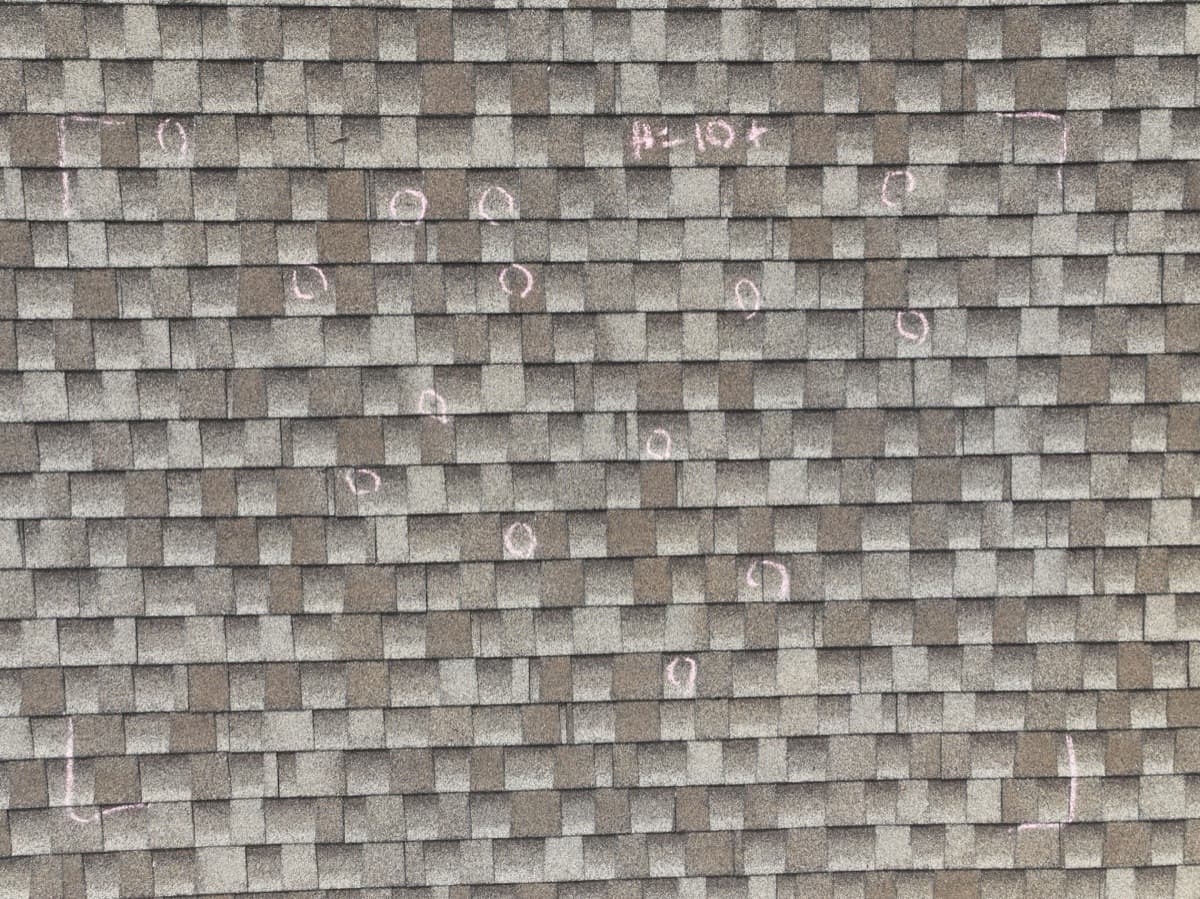
Why? Because hail damage on a roof is not always obvious, even to trained eyes. The visible stuff, like missing shingles or cracked vents, is easy to spot. But the real damage from hail is often subtle. It shows up as soft spots in the shingle mat where the impact bruised the asphalt without breaking through. It shows up as granule displacement that exposes the underlying fiberglass to UV degradation. It shows up as hairline fractures in flashing and boot seals that will eventually leak.
A qualified inspector knows exactly what to look for, how to document it in a format that supports your insurance claim, and what the full scope of necessary repairs actually includes.
At Gates Enterprises, we provide free post storm roof inspections across the entire Front Range. Our inspectors have thousands of hail damage assessments under their belts, and they document everything with detailed photos and measurements that adjusters understand. schedule a free inspection
Equally important: your contractor should be present when the insurance adjuster inspects your roof. Having a professional there to point out damage, discuss scope, and ensure nothing gets missed dramatically improves the outcome of most claims.
Step 5: Understanding the Insurance Claims Process
Once you have filed and the adjuster has visited, the insurance company will produce an estimate. This estimate details what they are willing to pay for. Here is what you need to know about it.
The first estimate is often incomplete. Common items that get missed or underpriced include drip edge, pipe boots, ice and water shield, starter strips, ridge cap, haul away and disposal, and proper ventilation components. These are not optional extras. They are required parts of a proper roof installation. If they are missing from the estimate, the estimate needs to be supplemented.
Supplementing is standard practice. Your contractor reviews the insurance estimate, identifies what is missing or underpriced, and submits documentation requesting additional funds. Insurance companies process supplements routinely. It is not adversarial. It is just part of the process.
If you have an RCV (Replacement Cost Value) policy, the initial payment will be the ACV (Actual Cash Value), which is the replacement cost minus depreciation. Once you complete the work, you submit documentation and the insurance company releases the recoverable depreciation. This is money you are owed, but you have to complete the project and request it.
Step 6: Temporary Repairs vs. Permanent Fixes
Your insurance policy requires you to mitigate further damage. That means if your roof is actively leaking, you need to take reasonable steps to stop the damage from getting worse. Emergency tarping, placing buckets under leaks, and moving belongings away from water are all appropriate mitigation steps.
However, do not make permanent repairs before the adjuster has inspected and documented the damage. If you replace shingles or patch sections before the insurance company has seen the original damage, you may complicate your claim. They need to see the damage to approve coverage for it.
If your roof needs emergency tarping, call a professional. Most reputable roofing companies, including Gates Enterprises, offer emergency tarp services and can respond quickly after storms. storm and hail damage repair
Step 7: Choosing the Right Contractor (This Is Where It Counts)
After every major hailstorm in Colorado, the storm chasers arrive. Out of state contractors flood into the area with door knocking crews, temporary offices, and promises to handle everything. Some of them are legitimate. Many are not.
Here is what to watch out for. Any contractor who pressures you to sign a contract on the spot is a red flag. Anyone who offers to pay or waive your insurance deductible is committing insurance fraud under Colorado law. Any company that cannot provide a verifiable local address, a history of work in the area, and proof of Colorado licensing and insurance should not be on your roof.
What you should look for: manufacturer certifications. The top shingle manufacturers (GAF, Owens Corning, CertainTeed, Malarkey) all have certification programs that require contractors to meet strict standards for training, installation quality, and business practices. These certifications unlock the best warranty packages and are only given to contractors who earn them.
Gates Enterprises is quadruple certified: GAF Master Elite, Owens Corning Preferred, Malarkey Emerald Premium, and CertainTeed ShingleMaster. Less than 1% of roofing contractors in the country carry all four. That means no matter which shingle brand is right for your roof, we can install it to the manufacturer's highest standards with the best warranty available. about Gates Enterprises
Step 8: How Fast Should You Act?
The short answer: fast, but not panicked. Here is a realistic timeline for what should happen after a hailstorm hits your neighborhood.
Day 1: Document everything, check for interior damage, file with your insurance company. Days 1 to 3: Schedule a professional roof inspection. Week 1 to 2: Have your contractor inspect the roof and provide their assessment. Week 2 to 4: Insurance adjuster visits (your contractor should be present). Week 4 to 8: Estimate reviewed, supplements filed if needed, scope finalized. Week 6 to 12: Roof replacement or repair completed roof replacement services.
The biggest mistake homeowners make is waiting too long to start the process. Every week you delay pushes your project further back in the queue, and in a heavy storm year, the best contractors are booked out months in advance.
Get Your Free Post Storm Inspection from Gates Enterprises
If a hailstorm just hit your neighborhood, or if you suspect your roof has damage from a recent storm, do not wait. Call Gates Enterprises at (720) 766-3377 for a free, no obligation roof inspection. We will document the damage, walk you through your options, and support your insurance claim from start to finish.
With thousands of roofs completed across the Colorado Front Range and quadruple manufacturer certification that very few Colorado roofers hold, we bring a level of expertise and accountability that protects your home and your investment. see our reviews
Call (720) 766-3377 or contact us to schedule your free inspection today See our best roofer in Denver page for certified roofing options near you..
If your roof is actively leaking, that is a different job entirely. emergency roof repair when your roof fails during a storm covers what to do when a roof fails mid-storm, and hail and storm damage roof repair in Denver covers the repair process across the metro afterward.