
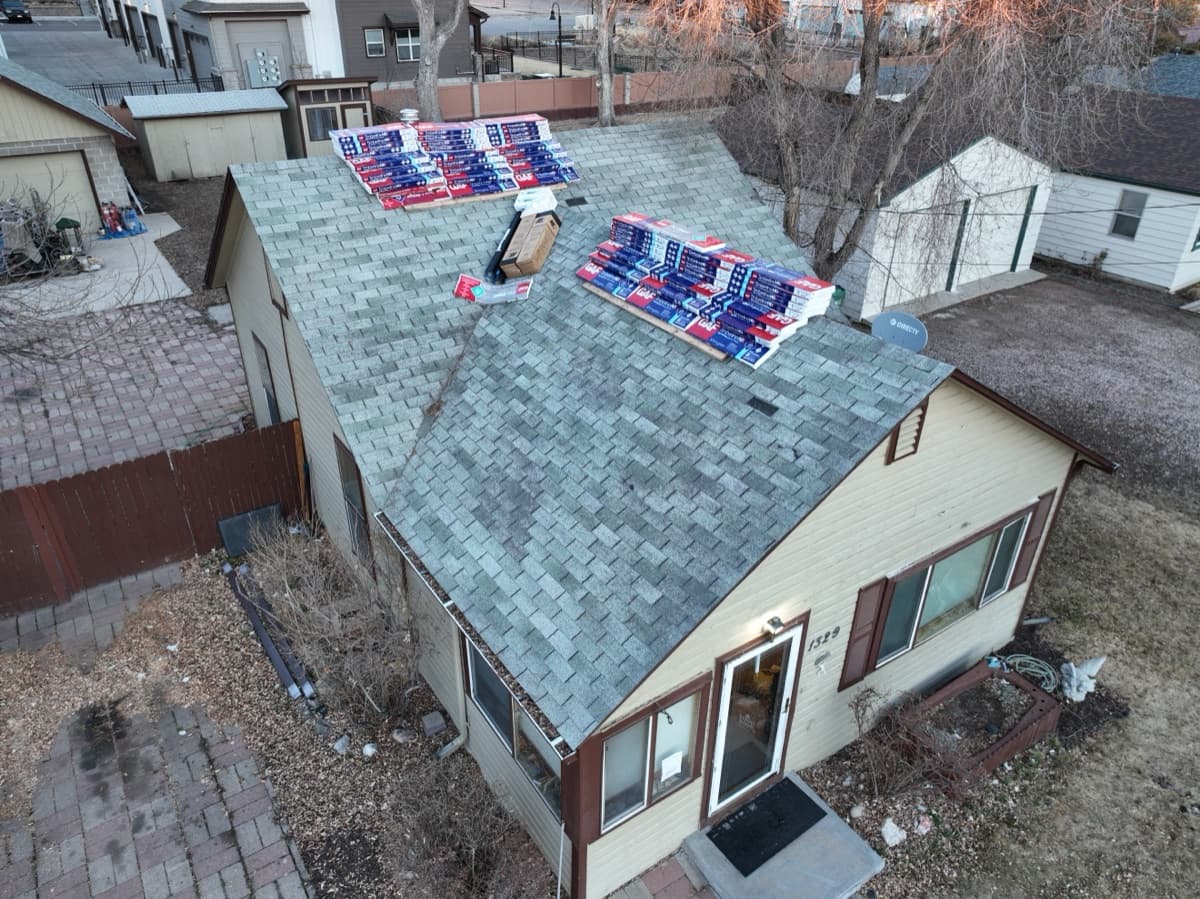
If you are getting a new roof in Colorado, someone has probably mentioned Class 4 impact resistant shingles. Maybe your insurance agent brought them up. Maybe your contractor suggested the upgrade. Maybe you saw the price difference on an estimate and wondered if it was worth paying more.
The short answer: for most Colorado homeowners, yes. The longer answer involves some math, some insurance policy details, and a closer look at what these shingles actually do when hailstones start falling. This guide breaks down everything you need to know so you can make the right call for your home and your budget.
What Does Class 4 Impact Resistance Actually Mean?
Impact resistance in roofing shingles is rated on a scale from Class 1 to Class 4, with Class 4 being the highest rating. The classification comes from UL 2218, a standardized test developed by Underwriters Laboratories that simulates hail impact.
The test is straightforward. A two-inch steel ball is dropped from 20 feet onto the shingle. The shingle is tested at freezing temperatures to simulate real-world storm conditions. After the impact, the shingle is inspected. If there are no cracks, splits, tears, or fractures in the fiberglass mat, the shingle passes.
For context, Class 1 shingles survive a 1.25-inch steel ball dropped from 12 feet. Class 2 handles a 1.5-inch ball from 15 feet. Class 3 takes a 1.75-inch ball from 17 feet. Class 4, the top tier, withstands that full 2-inch ball from 20 feet. That is roughly equivalent to a golf ball-sized hailstone hitting your roof at terminal velocity.
Standard architectural shingles, the kind installed on most Colorado homes, are not impact rated at all. They are built to handle normal weather, rain, wind, sun exposure, but they were never designed to survive direct hits from large hailstones. When a golf ball-sized stone hits a standard shingle, it bruises or cracks the fiberglass mat, displaces granules, and shortens the shingle's life dramatically. A Class 4 shingle takes the same hit and keeps going.
This distinction matters more in Colorado than almost anywhere else in the country. The Front Range sits in the most hail-prone corridor in North America. If you live between Fort Collins and Colorado Springs, your roof will get hit by hail. It is not a question of if. It is a question of when and how bad.
How Much More Do Class 4 Shingles Cost?
On a typical Colorado home, the upgrade from standard architectural shingles to Class 4 impact resistant shingles adds roughly 10 to 20 percent to the material cost. For most Front Range homes, that translates to somewhere between $1,500 and $4,000 more on a full roof replacement roof replacement.
The exact premium depends on the specific product you choose, the size and complexity of your roof, and the brand. Some Class 4 shingles are only slightly more expensive than premium non-rated options. Others, particularly thicker designer profiles, carry a larger premium.
Here is where it gets interesting. That upfront cost increase is only half the equation. The other half is what happens to your insurance premiums after installation.
The Colorado Insurance Discount That Changes the Math
Most Colorado home insurance companies offer a premium discount for roofs with Class 4 impact resistant shingles. The discount typically ranges from 15 to 35 percent off the wind and hail portion of your premium, though some insurers apply it to the entire policy.
On a typical Colorado homeowner's insurance policy, hail and wind coverage makes up a significant chunk of the premium. Colorado premiums are among the highest in the nation specifically because of hail risk. If your annual premium is $3,000 to $5,000, which is common along the Front Range, a 20 to 30 percent discount on the wind/hail portion can easily save you $500 to $1,200 per year.
Let's run the numbers on a real scenario. Say your roof replacement costs $18,000 with standard shingles and $21,000 with Class 4 shingles. That is a $3,000 upgrade. Your insurance company gives you a 25 percent discount on your wind/hail premium, saving you $900 per year. In just over three years, the insurance savings have completely paid for the upgrade. Every year after that is pure savings.
Over a 30-year roof life, that $3,000 upgrade could save you $27,000 in insurance premiums. Even with more conservative numbers (a 15 percent discount saving $500 per year), the upgrade pays for itself within six years and saves $15,000 over the roof's lifetime.
To get the discount, you typically need to provide your insurance company with documentation showing that Class 4 rated shingles were installed. Your contractor should provide a certificate of completion or a manufacturer's warranty document that confirms the impact rating. Keep copies of everything insurance claims assistance.
Best Class 4 Shingle Brands for Colorado
Not all Class 4 shingles are created equal. Each major manufacturer takes a different approach to achieving impact resistance, and the differences matter for Colorado homeowners.
GAF Timberline HDZ is one of the most popular choices in Colorado. GAF uses a proprietary StrikeGuard layer, a flexible polymer-modified asphalt that absorbs impact energy without cracking. The HDZ line carries a Class 4 rating and comes with LayerLock technology for wind resistance up to 130 mph. It is widely available, competitively priced, and backed by GAF's strong warranty program.
Owens Corning Duration FLEX is built with SureNail technology and a flexible asphalt formulation designed specifically for impact resistance. The FLEX designation means the shingle bends under impact rather than cracking. Owens Corning backs this product with their limited lifetime warranty. It is an excellent option for homeowners who want proven performance and a well-known brand behind it.
Malarkey Vista AR takes a different approach. Malarkey uses a rubberized polymer-modified (SBS) asphalt in their impact resistant line, which gives the shingle significant flexibility. SBS-modified shingles tend to perform well in cold temperatures, which matters in Colorado where hailstorms can drive temperatures down rapidly. Malarkey also incorporates recycled materials and algae-resistant granules, making it a strong choice for homeowners who care about sustainability alongside performance.
CertainTeed Presidential Impact combines a heavyweight, three-laminate construction with Class 4 impact resistance. These are thick, substantial shingles that offer a premium aesthetic along with their durability rating. They are also one of the more expensive options, but homeowners who want their roof to look as good as it performs often gravitate toward this product.
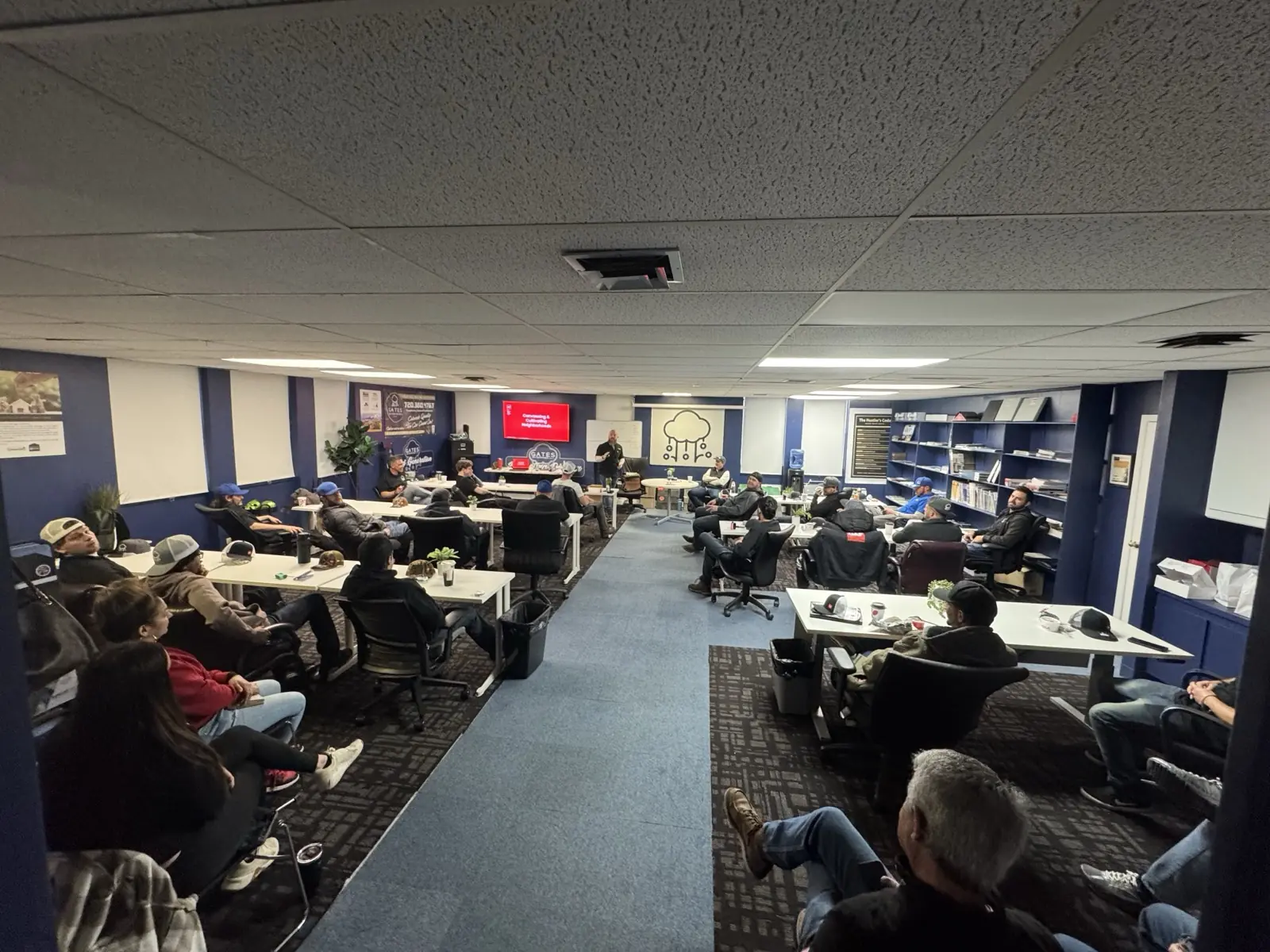
Here is where working with the right contractor matters. Most roofing companies carry one or two shingle brands. They will recommend what they have, which may or may not be the best fit for your home, your budget, and your aesthetic preferences. Gates Enterprises is quadruple certified: GAF Master Elite, Owens Corning Preferred, Malarkey Emerald Premium, and CertainTeed ShingleMaster. That means we carry all four major brands, install all of them regularly, and can give you an honest comparison without being locked into pushing one product. We have seen how each brand performs in real Colorado hailstorms, and we will tell you straight which one makes the most sense for your situation roof replacement.
Real-World Performance in Colorado Hailstorms
Lab tests are one thing. What matters is how these shingles hold up when an actual Colorado supercell drops two-inch hail on your neighborhood.
After major Front Range hailstorms, we inspect hundreds of roofs across all shingle types. The performance difference between standard and Class 4 shingles is significant and consistent. Standard architectural shingles hit by golf ball-sized hail almost always show bruising, cracking, and major granule loss. The roof is typically a total loss from an insurance perspective.
Class 4 shingles hit by the same storm tell a different story. They show granule displacement at impact points and sometimes minor cosmetic denting, but the fiberglass mat stays intact. The shingle continues to function as a waterproof barrier. It does not crack. It does not need to be replaced.
That said, Class 4 shingles are not indestructible. Baseball-sized hail (2.75 inches and above) can overwhelm even the best impact-rated products. Extreme storms with very large hailstones will still cause damage. But those events are relatively rare. For the much more common golf ball and quarter-sized hail events that hit the Front Range multiple times every summer, Class 4 shingles consistently survive intact storm and hail damage repair.
The difference also shows up in your roof's long-term condition. Roofs with standard shingles that survive a moderate hailstorm without visible cracking still suffer accelerated aging from granule loss and micro-bruising. They may look okay from the ground, but their functional life has been shortened. Class 4 shingles resist that cumulative degradation, which means they actually deliver on their full warranty life expectancy how long a roof lasts in Colorado.
How to Tell If Your Current Shingles Are Impact Resistant
If you are not sure whether your existing roof has Class 4 shingles, there are several ways to find out.
Check your installation paperwork. When your roof was installed, you should have received warranty documentation from the manufacturer. This will list the exact product name and its ratings. If it says Class 4, UL 2218 Class 4, or IR (Impact Resistant), you have impact-rated shingles.
Look for markings on the shingle itself. Some manufacturers stamp or print product codes on the back of each shingle. If you have access to an exposed shingle edge in the attic or a leftover bundle in the garage, check for identifying information.
Call your roofing contractor. If a professional company installed your roof, they should have records of the materials used. They can confirm the product and its impact rating.
Ask your insurance company. If you are receiving an impact-resistant shingle discount on your premium, your insurer has documentation on file confirming the Class 4 rating.
If none of those options work, a professional roof inspection can help identify the product. Experienced inspectors can often identify shingle brands and product lines by visual characteristics free roof inspection.
When Upgrading to Class 4 Makes Sense
The upgrade to Class 4 shingles makes the most financial sense in these situations.
You are already getting a full roof replacement. This is the ideal time. The incremental cost of upgrading from standard to Class 4 is much lower than retrofitting later. If your roof is at the end of its life or was damaged by a storm, this is your window roof replacement.
Your insurance company offers a meaningful discount. Call your insurer before you finalize your roofing contract. Ask exactly how much you will save annually with a Class 4 roof. Get it in writing. If the savings are strong, the upgrade becomes an easy financial decision.
You plan to stay in your home for five or more years. The ROI on Class 4 shingles builds over time through insurance savings. If you are selling next year, you may not recoup the full investment, though the impact-resistant rating is a selling point that can boost your home's appeal to buyers in hail-prone areas.
You are filing an insurance claim for hail damage. This is one of the best-kept secrets in Colorado roofing. When your insurance company approves a claim for roof replacement due to hail damage, they pay to replace your roof with comparable materials. Many insurers may cover the upgrade to Class 4 shingles because it reduces their future risk. Your contractor can often work with your adjuster to get the upgrade approved as part of the claim. You may end up with a better roof at a reduced out-of-pocket cost beyond your deductible insurance claims assistance.
When Class 4 Might Not Be Worth It
There are a few situations where the upgrade may not make sense.
Your insurance company does not offer a discount. Some smaller or non-standard insurers do not have an impact-resistant shingle discount program. Without the insurance savings, the ROI calculation takes much longer to break even. The shingles still offer better hail protection, but the financial case is weaker.
You are on a very tight budget. If the choice is between getting a quality standard roof now versus delaying the replacement to afford Class 4, go with the standard roof. A new standard shingle roof is always better than an aging, damaged one. You can upgrade to Class 4 on your next replacement.
Your home is in a low-hail-risk area. If you live on the Western Slope or in the mountains where significant hail events are rare, the added cost may not be justified by the risk reduction. Along the Front Range, this scenario does not apply. The hail will come.
The Insurance Claim Upgrade Strategy
This deserves its own section because it is the most common way Colorado homeowners end up with Class 4 shingles without paying the full premium out of pocket.
Here is how it works. A hailstorm damages your roof. You file an insurance claim. The adjuster confirms the damage and approves replacement. Your contractor submits the scope of work. During this process, your contractor can request that the insurance company approve Class 4 shingles as the replacement material.
Insurance companies are often receptive to this because it reduces their future exposure. A Class 4 roof means fewer claims down the road. Some insurers may cover the full upgrade cost. Others may cover a portion, leaving you with a manageable out-of-pocket difference beyond your deductible. Either way, you are getting a significantly better roof for a fraction of what it would cost outside of a claim.
The key is working with a contractor who understands the insurance process and knows how to present the upgrade request effectively. At Gates Enterprises, we coordinate the insurance documentation on every claim project. We work with adjusters to ensure the scope of work is accurate, the materials are properly documented, and the upgrade to Class 4 is presented as a smart investment for everyone involved insurance claims assistance.
Making the Right Choice for Your Colorado Home
Class 4 impact resistant shingles are not the cheapest option on the estimate. But when you factor in insurance savings, real-world hail performance, and the reduced likelihood of filing claims every few years, they are often the most cost-effective choice for Colorado homeowners over the life of the roof.
The math works in your favor along the Front Range. The insurance discounts are real. The hail protection is proven. And if you time the upgrade with an insurance claim, the out-of-pocket cost shrinks dramatically.
If you are considering a roof replacement or wondering whether your current roof would survive another hail season, we can help. Gates Enterprises offers free roof inspections across the Front Range. We will assess your current roof, discuss your options across all four major shingle brands, and help you figure out whether Class 4 shingles make sense for your home and your budget free roof inspection.
No pressure. No sales pitch. Just an honest assessment from a team that has installed thousands of roofs across Colorado and knows exactly how each product performs when the storms roll in See our best roofer in Denver page for certified roofing options near you..