
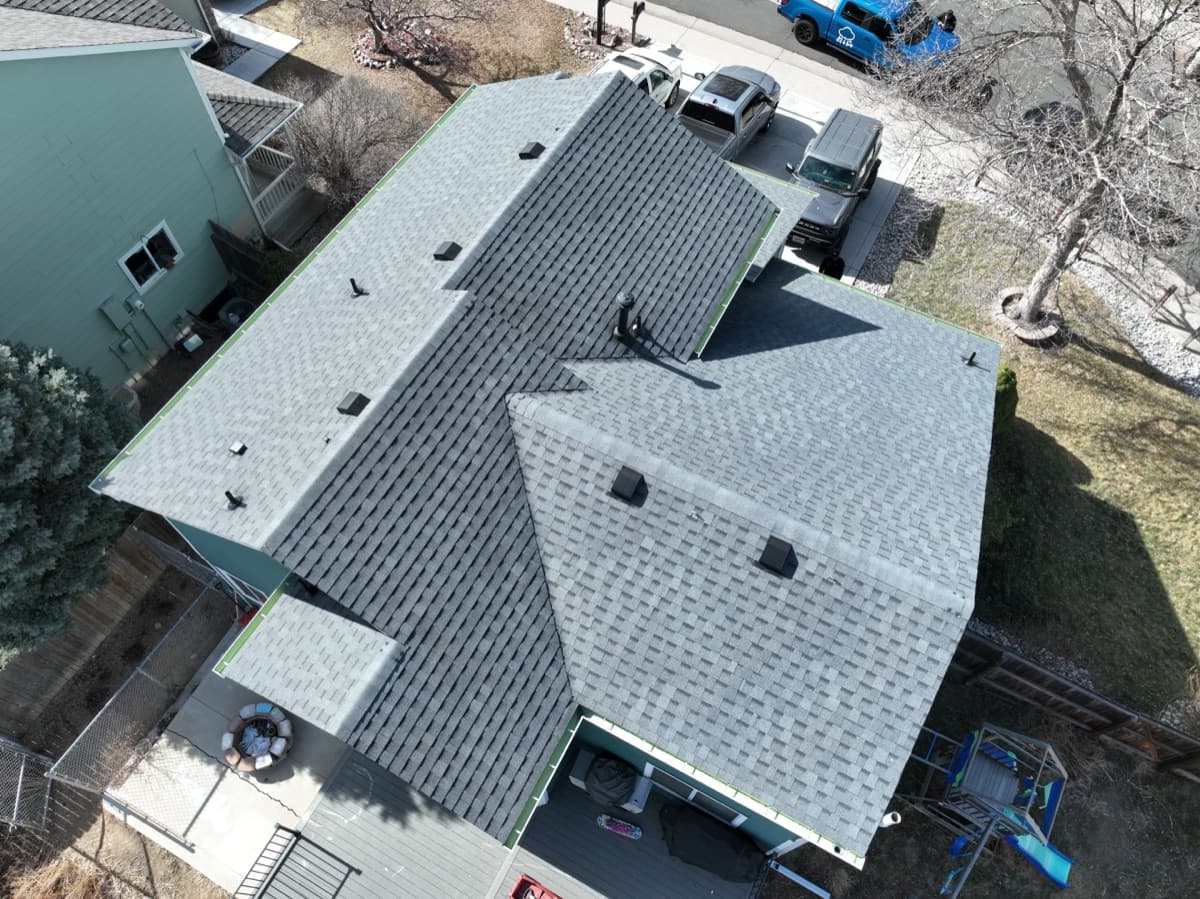
There is a stretch of Colorado between Denver and Colorado Springs that gets pounded by hail more often and more severely than almost anywhere else in the United States. If you live in Castle Rock, Larkspur, Monument, Palmer Lake, or the surrounding communities, you already know this from experience. Your roof has probably been replaced at least once, maybe twice, in the last decade.
This area sits on the Palmer Divide, a geographic feature that creates weather conditions uniquely favorable to severe hailstorm formation. Understanding why this happens helps explain why your roofing decisions here carry even more weight than elsewhere in Colorado.
What Is the Palmer Divide?
The Palmer Divide is a ridge of elevated terrain that runs roughly east to west between Denver and Colorado Springs. It is the drainage divide that separates water flowing north toward the South Platte River from water flowing south toward the Arkansas River. The highest point of the divide is approximately 7,500 feet, which is significantly higher than both Denver (5,280 feet) and Colorado Springs (6,035 feet).
The divide is not a dramatic mountain range. You would not necessarily know you were crossing it while driving I 25 between Castle Rock and Monument. But meteorologically, it is one of the most significant geographic features on the Front Range.
Why the Palmer Divide Breeds Hailstorms
Several factors converge at the Palmer Divide to create ideal hailstorm conditions.
Upslope Moisture. Warm, moist air from the eastern plains gets pushed westward and upward as it encounters the elevated terrain of the divide. This forced lifting is a primary trigger for thunderstorm development.
Convergence Zone. The Palmer Divide acts as a convergence point where air flows from both the north (Denver basin) and south (Colorado Springs basin) meet. When these air masses converge at the divide, the collision forces air upward, creating the strong updrafts that thunderstorms need to grow.
Elevation and Temperature. The higher elevation of the divide means cooler temperatures at the storm formation level. This creates a steeper temperature gradient between the warm surface air and the cold upper atmosphere, which powers stronger updrafts. Stronger updrafts keep hailstones suspended longer, allowing them to grow larger before falling.
Afternoon Heating Pattern. Colorado's afternoon thunderstorm cycle is driven by solar heating of the terrain. The Palmer Divide, because of its elevation, heats and triggers storm development earlier and more reliably than surrounding lower terrain. This is why the Palmer Divide area often gets hit by hail in the early to mid afternoon while Denver does not see storms until later in the day.
The Result: More Hail, Bigger Hail, More Often
The Palmer Divide corridor consistently ranks among the top areas in the country for hail frequency and severity. Communities along the divide can expect significant hail events (one inch diameter or larger) multiple times per season. Some years bring four or five damaging hailstorms to the same neighborhoods.
National Weather Service data shows that the area between Castle Rock and Monument has more reported large hail events per square mile than virtually any other populated area in the United States.
What This Means for Your Roof
If you live on or near the Palmer Divide, your roofing decisions are higher stakes than most Colorado homeowners face. You will almost certainly experience significant hail, and you may get hit multiple times between roof replacements roof replacement services.
Class 4 impact resistant shingles are not a luxury on the Palmer Divide. They are a necessity. Standard architectural shingles can be destroyed by a single significant hailstorm. Class 4 shingles can survive multiple events and extend the time between replacements significantly Class 4 impact resistant shingles.
Insurance selection matters even more. Your deductible, your coverage type (ACV vs RCV), and any cosmetic damage exclusions will directly affect your financial exposure when the next storm hits. Review your policy annually and understand exactly what you are covered for.
Contractor experience with insurance restoration is critical in this corridor. After major hail events, out of state contractors flood the Castle Rock and Monument areas. Working with a local, established contractor who documents storm damage daily means your claim is supported by evidence in the format adjusters expect from the start, and completely insurance restoration services.
Roofing Strategies for Palmer Divide Homeowners
Install Class 4 impact resistant shingles. Always. The insurance premium discount (typically 20 to 30 percent) plus the reduced replacement frequency makes this the clear financial winner for this area.
Choose a contractor with top manufacturer certifications. The warranty coverage that comes with certified installation matters when your roof is going to be tested by severe weather repeatedly.
Maintain your insurance policy actively. Know your deductible, your coverage type, and your filing deadlines. Review these annually with your agent.
Get a professional inspection after every significant hail event. Even if your roof looks fine from the ground, hail damage on the roof surface can be invisible without a close inspection.
Build a relationship with a local contractor you trust. When a major storm hits, contractors get busy fast. Having an established relationship means you get priority scheduling and consistent quality.
Gates Enterprises serves the Palmer Divide corridor extensively. Parker, Castle Rock, Monument, Larkspur, Palmer Lake, and the surrounding communities are part of our core service area. We understand the unique challenges of roofing in this hail corridor and we carry the material options and insurance expertise to match about Gates Enterprises.
Live on the Palmer Divide? Call Gates Enterprises at (720) 766-3377 or contact us for a free inspection and a hail strategy consultation tailored to your specific location See our best roofer in Denver page for certified roofing options near you..
The corridor covers two distinct markets. the Castle Rock roofing guide covers the north end, and Colorado Springs roofing covers the south.