
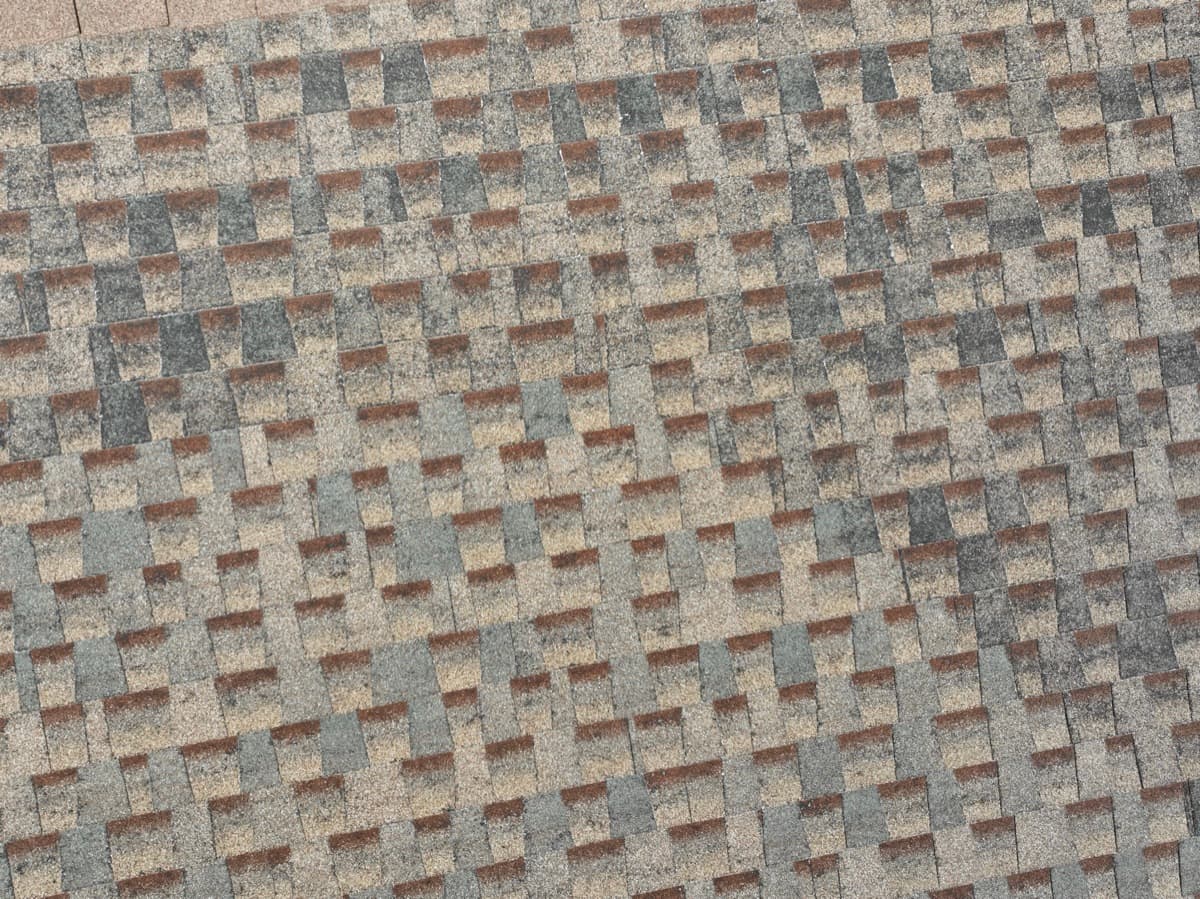
Colorado is one of the most hail-prone states in the country. The Front Range alone sees dozens of significant hailstorms every year between April and September, and the damage those storms leave behind is not always obvious. A roof that looks perfectly fine from the driveway can be hiding cracked shingles, bruised fiberglass mat, and compromised flashing that will lead to leaks and thousands of dollars in repairs if left unchecked.
This guide walks you through exactly how to spot hail damage on your roof, what it looks like on different roofing materials, what you can assess from the ground versus what requires a professional on the roof, and what to do once you suspect damage. Whether a storm just rolled through your neighborhood or you want to check on last season's hits, this is everything you need to know.
Why Hail Damage Is Easy to Miss
The most dangerous thing about hail damage is that it rarely looks dramatic. Unlike wind damage that rips shingles off or a fallen tree limb that punches a hole through your decking, hail damage is subtle. A golf ball-sized hailstone hits your shingle, fractures the fiberglass mat beneath the surface, knocks loose a patch of protective granules, and moves on. From the ground, you might not see anything at all.
But that invisible damage starts a clock. The exposed asphalt deteriorates under Colorado's intense UV radiation. Water seeps into hairline cracks during the next rainstorm. Freeze-thaw cycles over the winter widen those cracks. Within a year or two, a roof that looked fine after the storm is leaking into your attic.
That is why knowing what to look for matters. The sooner you identify hail damage, the sooner you can file an insurance claim and get your roof repaired or replaced before secondary damage drives up the cost.
What Hail Damage Looks Like on Asphalt Shingles
Asphalt shingles cover the vast majority of homes along the Colorado Front Range, and they are the most common material we inspect for hail damage at Gates Enterprises. Here is what hail does to them.
Granule Loss and Dark Spots
The ceramic granules on your shingles are their first line of defense against UV radiation and weather. When hailstones strike, they knock these granules loose, exposing the dark asphalt layer underneath. From the roof surface, you will see random dark spots or splotches scattered across the shingles. These are not uniform like normal wear patterns. Hail hits land randomly, so the granule loss will be scattered in no particular pattern.
Check your gutters and downspout outlets after a storm. If you see an unusual accumulation of gritty, sand-like granules, your shingles took hits across the entire roof.
Bruising You Cannot See
This is the trickiest form of hail damage. A bruised shingle looks intact on the surface, but the fiberglass mat underneath has been fractured by the impact. You cannot see bruising with your eyes. A trained inspector checks for it by pressing the area around a suspected impact with their thumb. If the spot feels soft or spongy compared to the surrounding shingle, the mat is compromised.
Bruised shingles will crack and fail much faster than undamaged ones. Insurance adjusters look specifically for bruising during their inspections, and it is one of the most common reasons a roof qualifies for full replacement insurance claims assistance.
Cracks and Fractures
Hailstones 1.5 inches or larger can crack asphalt shingles outright. Look for irregular cracks radiating from an impact point, sometimes in a starburst pattern. Hail cracks are random in both location and direction, which distinguishes them from thermal cracking (which follows straight lines) and from manufacturing blisters (which tend to be circular).
Cracked shingles are no longer waterproof. They need replacement.
Exposed Fiberglass Mat
In severe impacts, the hailstone knocks away both the granules and the underlying asphalt, exposing the white or light-colored fiberglass mat. If you see bright white spots on your shingles, that is exposed mat, and it means the shingle has zero UV protection in that area. Deterioration accelerates rapidly from this point.
What Hail Damage Looks Like on Metal Roofs
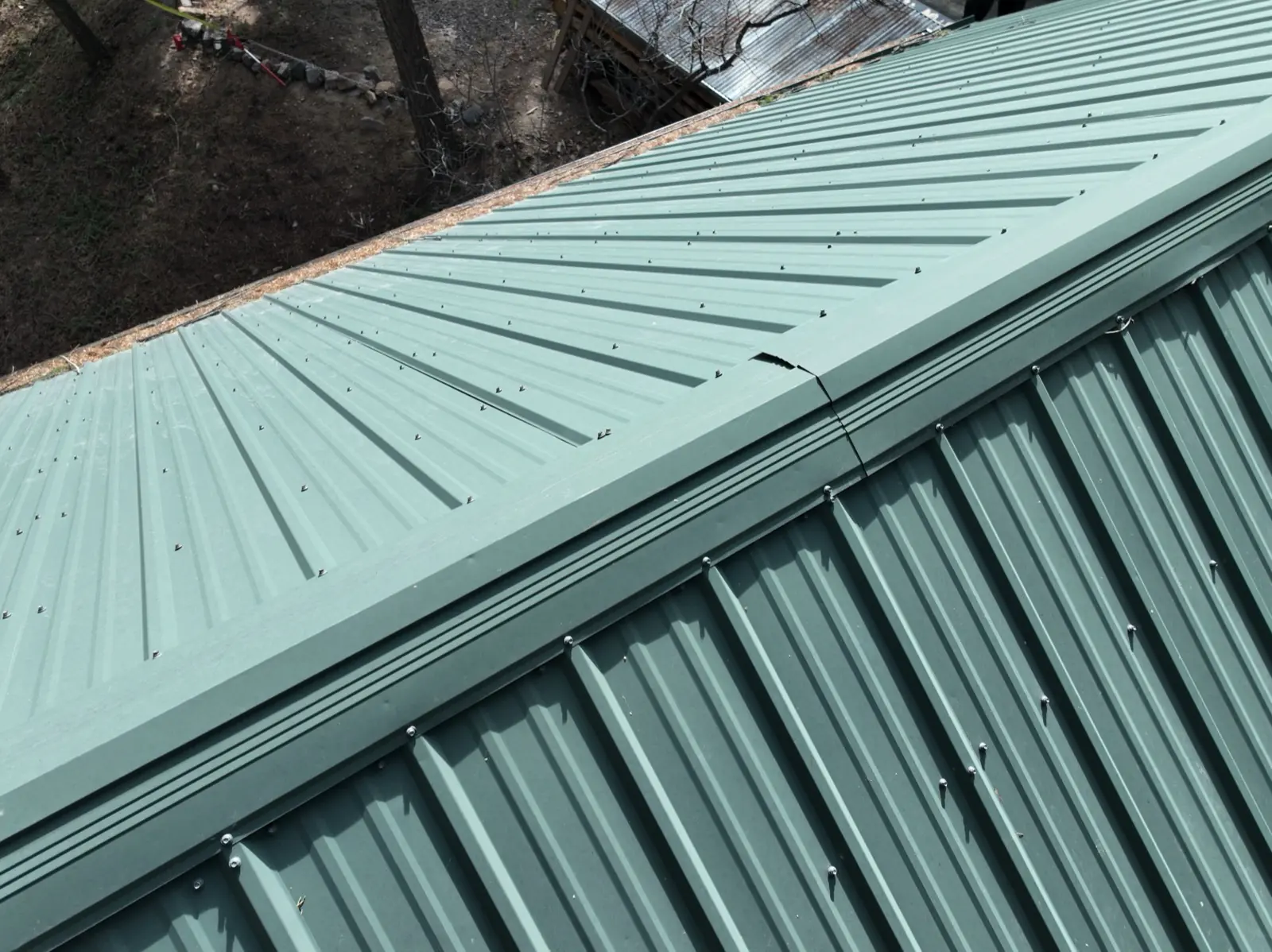
Metal roofing, including standing seam steel and aluminum panels, is growing in popularity across Colorado for its durability and longevity. But metal is not immune to hail.
Dents and Dimples
The most obvious sign of hail damage on a metal roof is denting. Unlike asphalt shingles where damage can be hidden, metal panels show every hit as a visible dent or dimple. After a significant hailstorm, a metal roof can look like a golf ball, covered in small, round depressions.
The functional impact depends on severity. Minor cosmetic denting on a standing seam roof may not affect waterproofing at all. But severe denting can stress panel seams, compromise coatings, and create low spots where water pools. On exposed fastener metal roofs, dents near screws can loosen the seal and create leak points.
Chipped or Cracked Coatings
Most metal roofing panels have a factory-applied paint or coating that protects against corrosion and UV degradation. Hail impacts can chip or crack this coating, exposing bare metal underneath. Over time, the exposed metal oxidizes and corrodes, especially in Colorado's environment of intense sun, freeze-thaw cycles, and occasional moisture.
Seam and Fastener Damage
On standing seam metal roofs, check the raised seams after a storm. Hail impacts near seams can distort the profile and weaken the interlock. On exposed fastener systems, check that rubber washers under screws are still seated properly. A dent near a fastener can lift the washer and create a direct path for water entry.
What Hail Damage Looks Like on Tile Roofs
Tile roofs, both concrete and clay, are less common on the Front Range than in some other parts of the state, but homes in neighborhoods with Mediterranean or Spanish-style architecture often have them. Tile is durable against many weather threats, but hail is its weakness.
Cracks and Chips
Hailstones can crack clay and concrete tiles on impact. Look for visible fracture lines running across the face of individual tiles. Chips along the edges are also common. Even a small crack in a tile allows water to penetrate to the underlayment beneath, which degrades over time.
The challenge with tile roofs is that cracked tiles can be hard to see from the ground, especially on roofs with a textured or multi-toned tile. Individual cracked tiles may go unnoticed for months until a leak develops.
Shattered Tiles
Large hailstones, 2 inches or bigger, can shatter clay tiles entirely. You may find tile fragments in your yard or gutters after a severe storm. If you see broken tile pieces on the ground, your roof sustained significant damage and needs immediate professional inspection.
Dislodged Tiles
Hail combined with wind can shift tiles out of position, breaking the overlap pattern that keeps water out. Even a single dislodged tile creates a gap where water enters during the next rain.
Signs You Can Check from the Ground
You do not need to climb on your roof to get a preliminary read on whether hail damage occurred. Here is what to look for from ground level, no ladder required.
Dented Gutters and Downspouts professional gutter services
Walk the perimeter of your home and look at your gutters at eye level. Aluminum gutters dent at lower impact thresholds than roofing materials, so they serve as a reliable indicator. If your gutters show a pattern of round dents along their length, the hail was large enough to damage your roof too.
Damaged Siding and Window Screens
Look at your siding, especially vinyl or aluminum. Hail dings on siding confirm storm severity. Check window screens for holes, tears, or dents in the frames. These are easy-to-spot indicators that adjusters use to validate hail size and intensity.
The Soft Metal Test
Examine every exposed soft metal surface around your property. Your air conditioning unit fins, aluminum window trim, mailbox top, painted fence caps, and deck rails all tell the story. A pattern of round dents on soft metals proves hailstones were hitting your property with force. Photograph everything you find, with a coin next to each dent for scale storm and hail damage repair.
Granules in Gutters and at Downspout Outlets
After a storm, check where your downspouts discharge. An unusual pile of gritty granules at the outlet means your shingles lost protective material across a wide area. Some granule loss is normal over time, but a sudden large deposit after a storm is a clear sign of hail impacts.
Shingle Debris in the Yard
Look for pieces of shingle, flashing, or ridge cap material on the ground around your home. Wind-driven hail can knock pieces loose that end up in your yard or flower beds.
Visible Damage from Across the Street
Grab binoculars and scan your roof from across the street. Look for dark splotchy areas (granule loss), missing shingles, or any inconsistency in the roof surface. Compare different slopes of the roof. Hail often hits one side harder than the other depending on the storm's wind direction.
Signs That Require a Professional Up-Close Inspection
Ground-level checks can tell you a storm caused damage, but they cannot tell you the full extent. These critical indicators require someone on the roof.
Bruising and mat fractures are invisible from the ground. An inspector presses suspected impact areas to feel for the telltale softness of a broken fiberglass mat.
Hairline cracks around impact marks only show up at close range, often requiring the inspector to flex the shingle slightly to reveal the fracture.
Flashing damage around chimneys, skylights, and wall transitions needs hands-on inspection. Dented or shifted flashing can allow water behind it without any visible sign from below.
Pipe boot and vent damage at roof penetrations is a common leak source after hail. The rubber gaskets on pipe boots crack and split when hit, and metal vent caps dent and warp.
Ridge cap assessment requires being on the roof ridge. Ridge caps take the most hail exposure because they sit at the highest point, and damage here is invisible from the ground.
This is why a professional inspection matters. A homeowner scanning the roof with binoculars might see a few obvious marks, but a certified inspector on the roof will find damage patterns that determine whether your roof needs spot repairs or full replacement free roof inspection.
When to Call a Professional
Call a professional roofing contractor if any of the following apply.
Your area experienced a confirmed hailstorm with stones 1 inch or larger. At this size, asphalt shingles are virtually guaranteed to sustain damage, even if you cannot see it from the ground.
You see dented gutters, damaged siding, or dings on soft metals around your property. These ground-level indicators strongly correlate with roof damage.
Your neighbors are getting roof replacements after a storm. If the homes around you are being re-roofed, your house was hit by the same storm roof replacement services.
You notice granule buildup in your gutters or dark spots on your shingles after a storm. These are the most visible signs of shingle damage.
Your roof is more than 10 years old and has been through multiple hail seasons. Cumulative hail exposure degrades shingles even when individual storms seem minor.
Gates Enterprises offers free roof inspections across the entire Colorado Front Range, from Fort Collins to Castle Rock and everywhere in between free roof inspection. Our inspectors are specifically trained for Colorado hail damage assessment. We get on the roof, document every area of damage with photos, and give you a straight answer about your roof's condition. No sales pressure. If your roof is fine, we tell you it is fine.
You can also check your address for free at myhailscore.com to see if hail events have been recorded near your address. It uses NOAA radar data to show storm history for any Colorado property.
Colorado Insurance Claim Tips for Hail Damage
Spotting the damage is step one. Getting it covered by your insurance company is step two. Here are the tips that make the biggest difference for Colorado homeowners.
Document Before You Call Your Insurer
Walk your property and photograph everything before you file the claim. Dented gutters, damaged siding, granules in downspouts, and any visible shingle damage. Include a coin or pen for scale in close-up shots. Date and time stamp every photo.
Get a Professional Inspection First
Have a qualified roofing contractor inspect your roof before the insurance adjuster arrives. Your contractor's report gives you a benchmark to compare against the adjuster's findings. If the adjuster misses something, you have documentation to support a supplement insurance claims assistance.
Have Your Contractor Present for the Adjuster Visit
This is one of the most impactful steps you can take. When your roofer walks the roof alongside the adjuster, they can point out damage in real time and ensure the full scope is captured. Gates Enterprises attends adjuster meetings with our clients as standard practice.
Know Your Deductible
Most Colorado policies now use percentage-based deductibles for wind and hail, typically 1 to 2 percent of your home's insured value. On a $500,000 home, that is $5,000 to $10,000 out of pocket. Know your number before the process starts.
Understand ACV vs. RCV
Replacement Cost Value (RCV) policies pay to replace your roof with comparable new materials. Actual Cash Value (ACV) policies pay the depreciated value, which can be dramatically less on an older roof. If you have an RCV policy, remember to request the recoverable depreciation release after the work is completed. This can be thousands of additional dollars.
Do Not Wait to File
Colorado's statute of limitations for property damage claims is generally two years, but many policies have shorter filing deadlines written into the contract. File promptly after confirming damage. For a complete walkthrough, read our detailed guide on filing a hail damage insurance claim in Colorado how to file a hail damage insurance claim in Colorado.
Why It Matters to Act Fast
Hail damage does not fix itself. It gets worse. Here is what happens when you wait.
Granule loss accelerates UV degradation. Once the protective granule layer is compromised, Colorado's intense sunshine breaks down the exposed asphalt far faster than normal. Shingles that might have lasted another 10 years can fail within 2 to 3 years after a significant hail hit.
Hairline cracks become water entry points. Every rainstorm pushes moisture into cracks that hail created. Over the winter, freeze-thaw cycles widen those cracks. By the following spring, what started as a surface crack has become a pathway into your decking and attic.
Insurance filing windows close. Wait too long and you may lose the right to file a claim entirely. Some policies require filing within one year of the loss date. Even within the filing window, older damage is harder to prove was storm-related versus normal aging.
Secondary damage multiplies costs. A small leak from hail-damaged flashing can cause thousands of dollars in attic insulation damage, mold remediation, and drywall repair. What could have been a straightforward roof replacement becomes a major restoration project.
Cumulative exposure compounds the problem. If your roof took hits last summer and takes more hits this summer, the combined damage is worse than either storm alone. Each hailstorm that lands on an already-compromised roof pushes it closer to catastrophic failure.
The bottom line: the best time to inspect your roof after a hailstorm is immediately. The second best time is today.
Get Your Roof Inspected Before the Next Storm
Colorado hail season runs from April through September, and 2026 is shaping up to be another active year along the Front Range. If your roof has been through even one significant hailstorm and has not been professionally inspected, you could be sitting on damage that is getting worse with every passing month.
Gates Enterprises has completed over 7,200 roofing projects across the Colorado Front Range. We carry a 4.9-star rating with over 348 verified reviews. We hold all four major manufacturer certifications: GAF Master Elite, Owens Corning Preferred, Malarkey Emerald Premium, and CertainTeed ShingleMaster. Very few roofing companies in Colorado hold all four.
We serve homeowners across {lakewood-link}, {denver-link}, {aurora-link}, {arvada-link}, {castle-rock-link}, and dozens of other Front Range communities. Our inspections are free, thorough, and come with zero pressure.
Call us at (720) 766-3377 or schedule your free inspection online free roof inspection. We will tell you exactly what shape your roof is in and help you figure out the smartest next step, whether that is filing a claim, scheduling repairs, or simply keeping an eye on things until the next storm See our best roofer in Denver page for certified roofing options near you..
Once you know what you are looking at, the next moves matter more than the photos. what to do after a hailstorm hits your home in Colorado covers the first days after a Colorado hailstorm, and what hail damage roof repair costs in Colorado covers what the repair actually runs.