
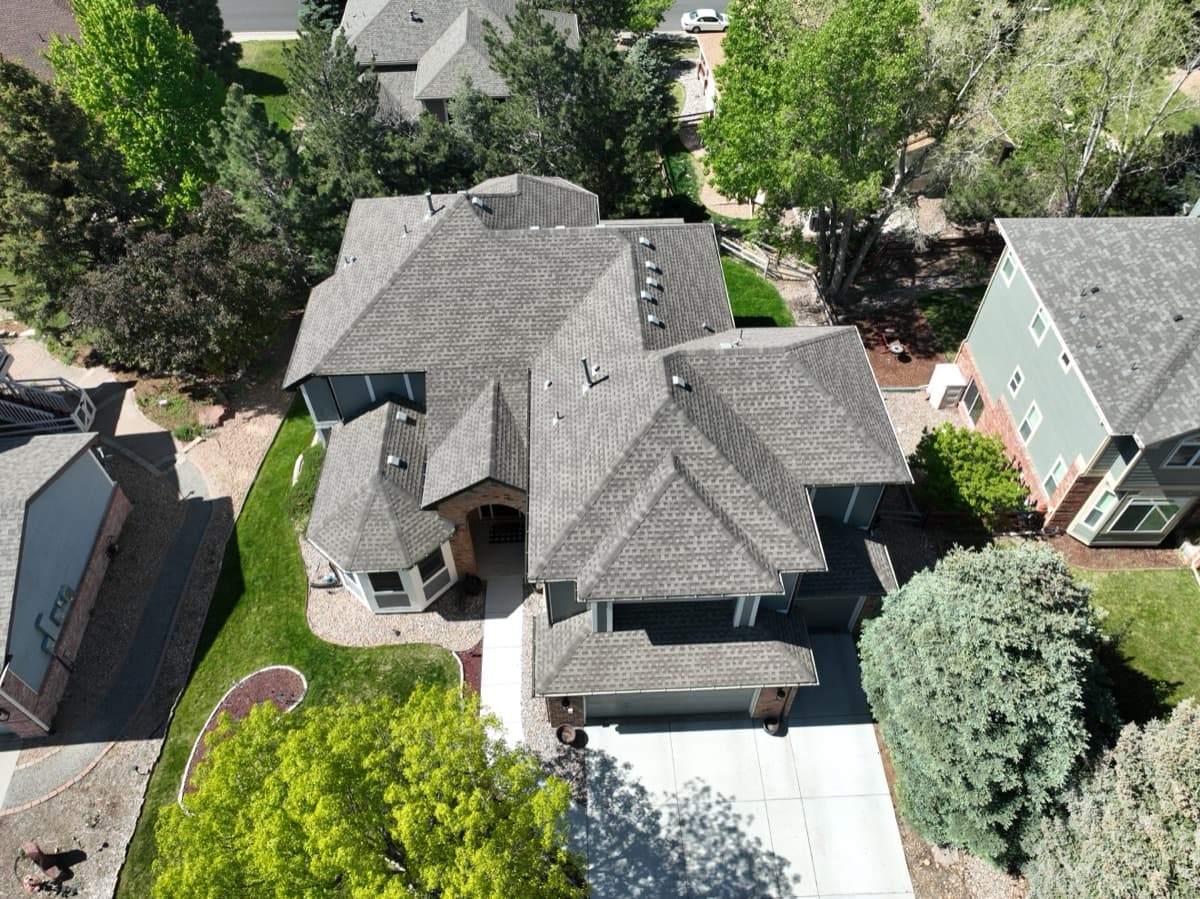
If your roof gets damaged by a hailstorm in Colorado, the amount of money your insurance company pays you depends enormously on one thing: whether you have an ACV or RCV policy. These two letters can mean the difference between a full roof replacement with minimal out of pocket cost and a settlement check that barely covers half of what you need roof replacement services.
Most homeowners do not think about this until they are filing a claim. By then, it is too late to change your coverage. So let us break down what these terms mean, how they work, and what you should do about it right now before the next hailstorm.
What Is RCV (Replacement Cost Value)?
An RCV policy pays to replace your damaged property with new, equivalent materials at current market prices, minus your deductible. If your 15 year old roof gets destroyed by hail, an RCV policy pays to install a brand new roof of similar quality. The age and depreciation of your existing roof does not reduce the payout.
RCV is the more comprehensive coverage and is what most homeowners want, especially in Colorado where roof replacement is a frequent reality due to hailstorms.
How RCV Actually Pays Out
Here is where it gets a little more complicated. Most RCV policies do not write you one check for the full replacement cost. The payout happens in two steps.
Step One: The Initial Payment. Your insurance company issues an initial payment based on the Actual Cash Value (ACV) of your roof. This is the replacement cost minus depreciation and minus your deductible. On a 12 year old roof with a $15,000 replacement cost and a $2,500 deductible, the initial ACV payment might be around $8,000 to $9,000 after depreciation is subtracted.
Step Two: Recoverable Depreciation. The remaining amount, the depreciation that was withheld, is released to you after you complete the replacement. You submit documentation showing the work was done, and the insurance company sends a second check for the recoverable depreciation. Now your total payout equals the full replacement cost minus only your deductible.
The critical point: you must actually complete the work to receive the recoverable depreciation. If you pocket the ACV check and never replace the roof, you leave that second payment on the table. Many homeowners do not realize this and walk away from thousands of dollars.
What Is ACV (Actual Cash Value)?
An ACV policy pays you the depreciated value of your damaged property. It considers what your roof was worth at the time of the damage, accounting for its age and condition. There is no recoverable depreciation. The ACV payment is the full and final payout.
On that same 12 year old roof with a $15,000 replacement cost, an ACV policy might pay $8,000 to $9,000 total, minus your deductible. That is it. The gap between that payment and the actual cost of a new roof comes out of your pocket.
For a roof that is close to the end of its lifespan, the depreciation is even steeper. A 20 year old roof on an ACV policy might receive a settlement that covers only 30 to 40 percent of the replacement cost. The homeowner would need to cover the remaining $8,000 to $10,000 or more out of pocket.
Why Colorado Is Shifting Toward ACV
Over the past several years, many insurance companies writing policies in Colorado have moved toward ACV coverage for roofs, particularly for older roofs. Some policies automatically convert from RCV to ACV once the roof reaches a certain age (often 10 to 15 years). Others offer ACV only for the roof while providing RCV coverage for other property.
Insurance companies made this shift because Colorado is one of the most expensive states in the country for hail claims. By moving to ACV, they reduce their payout obligations and shift more of the financial burden to homeowners. This is legal and increasingly common, but it is not always clearly communicated to policyholders.
How to Find Out What You Have
Pull out your policy declarations page. This is the summary document that lists your coverage types, limits, and deductibles. Look for language about your dwelling coverage and specifically about roof coverage. Key phrases to look for include replacement cost, actual cash value, roof surface payment schedule, and cosmetic damage exclusion.
If the language is unclear, call your insurance agent and ask directly: is my roof covered at replacement cost value or actual cash value? Ask if there are any age based provisions that change the coverage type as the roof ages. Get the answers in writing.
What You Can Do About It
If you currently have an ACV policy for your roof, you may be able to switch to an RCV policy, though the premium will be higher. For many Colorado homeowners, the additional premium is worth it given the near certainty of eventually needing a hail damage claim.
If you are shopping for a new homeowner's insurance policy, make roof coverage type one of your primary evaluation criteria. An RCV policy with a reasonable deductible provides far better protection in Colorado's hail prone environment than an ACV policy with a lower premium.
Installing Class 4 impact resistant shingles can also improve your insurance options. Many insurers offer premium discounts for Class 4 roofs, and some are more willing to write RCV coverage on homes with impact resistant materials Class 4 impact resistant shingles.
How This Affects Your Roofing Decision
If you have RCV coverage, insurance restoration through a qualified contractor should cover the full cost of your replacement minus your deductible. You can choose quality materials and expect the insurance to cover the scope properly.
If you have ACV coverage, the gap between your insurance payout and the actual replacement cost is your responsibility. In this situation, understanding your options becomes even more important. Your contractor should provide a clear estimate of your out of pocket costs so you can plan accordingly.
At Gates Enterprises, we work with homeowners across the full spectrum of insurance coverage situations. We review your insurance estimate, identify gaps, and help you understand exactly what you are working with before any work begins. For customers with ACV policies, we are transparent about the expected out of pocket costs and can discuss financing options to bridge the gap insurance restoration services.
Do Not Wait Until You Need to File
The best time to understand your insurance coverage is before you need it. Review your policy this week. If you discover you have ACV coverage and want to change, contact your agent now. If you have RCV coverage, make sure you understand the recoverable depreciation process so you are not surprised when the first check seems low.
Gates Enterprises has guided thousands of Colorado homeowners through the insurance restoration process. We know how ACV and RCV policies work in practice, not just in theory. Call us at (720) 766-3377 or contact us for a free roof inspection and insurance consultation See our best roofer in Denver page for certified roofing options near you..